


What are “when required” medicines?
These are medicines given only when needed (not on a fixed schedule), for symptoms like pain, nausea, indigestion, anxiety, insomnia, etc. Care Quality Commission
People with long-term conditions may also use PRN medicines (e.g. inhaler relief for asthma) Care Quality Commission
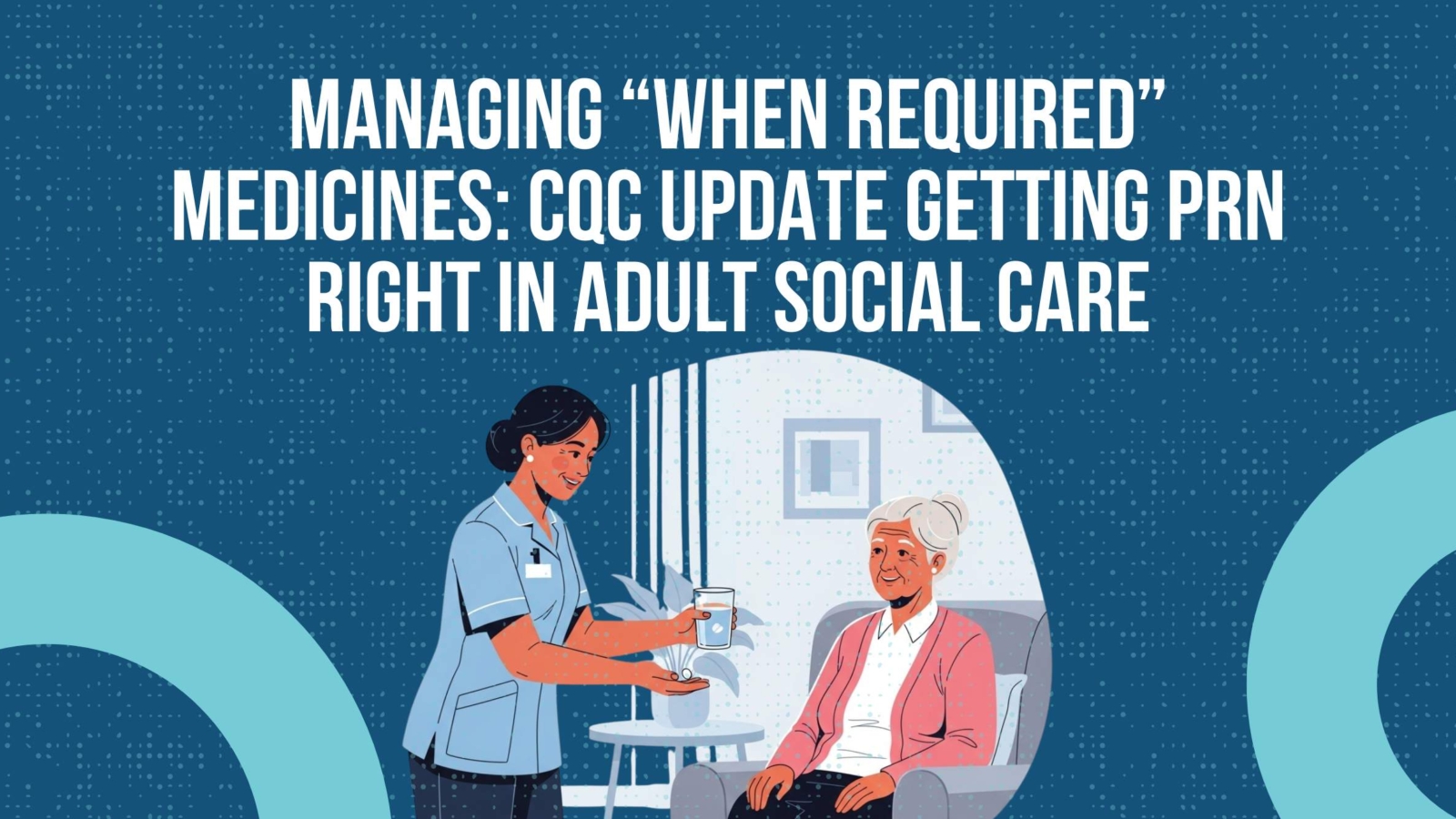
Managing “When Required” Medicines: Getting PRN Right in Adult Social Care
In adult social care, “when required” (also known as PRN or pro re nata) medicines play a crucial role in helping people manage symptoms like pain, anxiety, indigestion, or agitation. But PRN medication also carries risk, especially when staff aren’t clear on when, how, or why it should be given.
The Care Quality Commission (CQC) expects every provider to manage PRN medicines safely, consistently, and in a person-centred way.
Here’s what that means for your service.
1. Have a Clear PRN Medicines Policy
Every service should have a written policy setting out exactly how PRN medicines are handled, from prescribing and administering to recording and reviewing.
Your policy should outline:
- The approval process for new PRN prescriptions
- Who can administer PRN medicines and under what conditions
- How to record and monitor usage patterns
- Steps for regular reviews with prescribers
2. Create a Person-Centred PRN Care Plan
Each person’s PRN plan should be tailored to their individual needs. It must include:
- What condition or symptom the medicine treats
- Dose and frequency limits, including maximum daily amount
- What signs or triggers to look out for before offering the medicine
- Whether the person can request it themselves or needs prompting
- Any non-medication alternatives to try first (e.g. rest, reassurance, hydration)
- Instructions on the order of use if more than one PRN medicine applies
- When and how to review usage
- Clear steps for staff uncertainty like who to contact before giving the medicine
3. Manage Distress and Agitation Safely
PRN medicines are sometimes prescribed to manage distress, especially for people with dementia or mental health needs.
CQC is clear: medicine should never be the first resort.
- Always try non-medication strategies first, such as reassurance, engagement, or environmental changes.
- Review usage frequently with prescribers.
- If PRN medicines are being used to control behaviour rather than support wellbeing, this may raise safeguarding concerns.
- In care homes, don’t wait for set “meds rounds”, PRN medicines should be given when they’re genuinely needed.
- In homecare, make sure plans explain what happens between visits and how communication will flow between families, carers, and staff.
4. Keep Detailed Records and Monitor Outcomes
When a PRN medicine is given, record:
- Why it was needed
- What dose was given
- What time it was given
- What outcome was observed, did it help?
Patterns of frequent use, lack of effect, or unexpected reactions should always trigger a review with the prescriber.
Store PRN medicines safely, keep only what’s needed, and check expiry dates regularly.
5. Review, Reflect, and Refine
CQC inspectors often look for evidence that PRN medicines are reviewed regularly and used in line with care plans.
Regular review meetings, supervision discussions, and audits can help identify:
- Overuse or underuse patterns
- Training needs among staff
- Opportunities to improve care planning
As a care provider, you hold the key to safe and compassionate medicine use.
Now is the time to:
- Review your PRN medicines policy, is it up to date and understood by all staff?
- Audit your care plans to ensure each person’s PRN guidance is clear and personalised.
- Train your team to recognise when medicine is and isn’t the right response.
- Engage prescribers and families in open conversations about safe, responsive use.
A well-managed PRN system isn’t just good practice, it’s a marker of quality, safety, and respect for the people you care for.
Need help reviewing your PRN policies or training your staff on safe medication practice?
Dominion Consultancy Group offers expert-led compliance training and audits designed to help care providers meet and exceed CQC standards.
Get in touch: support@dominionconsultancy.com
Visit: www.dominionconsultancy.com
Add a Comment